Friar Park: The Beautiful Prison George Harrison Chose for Peace
George Harrison bought Friar Park as an escape from Beatlemania. The Gothic estate became his sanctuary, creative workshop, and an imposing responsibility that demanded money, labor, and constant care.
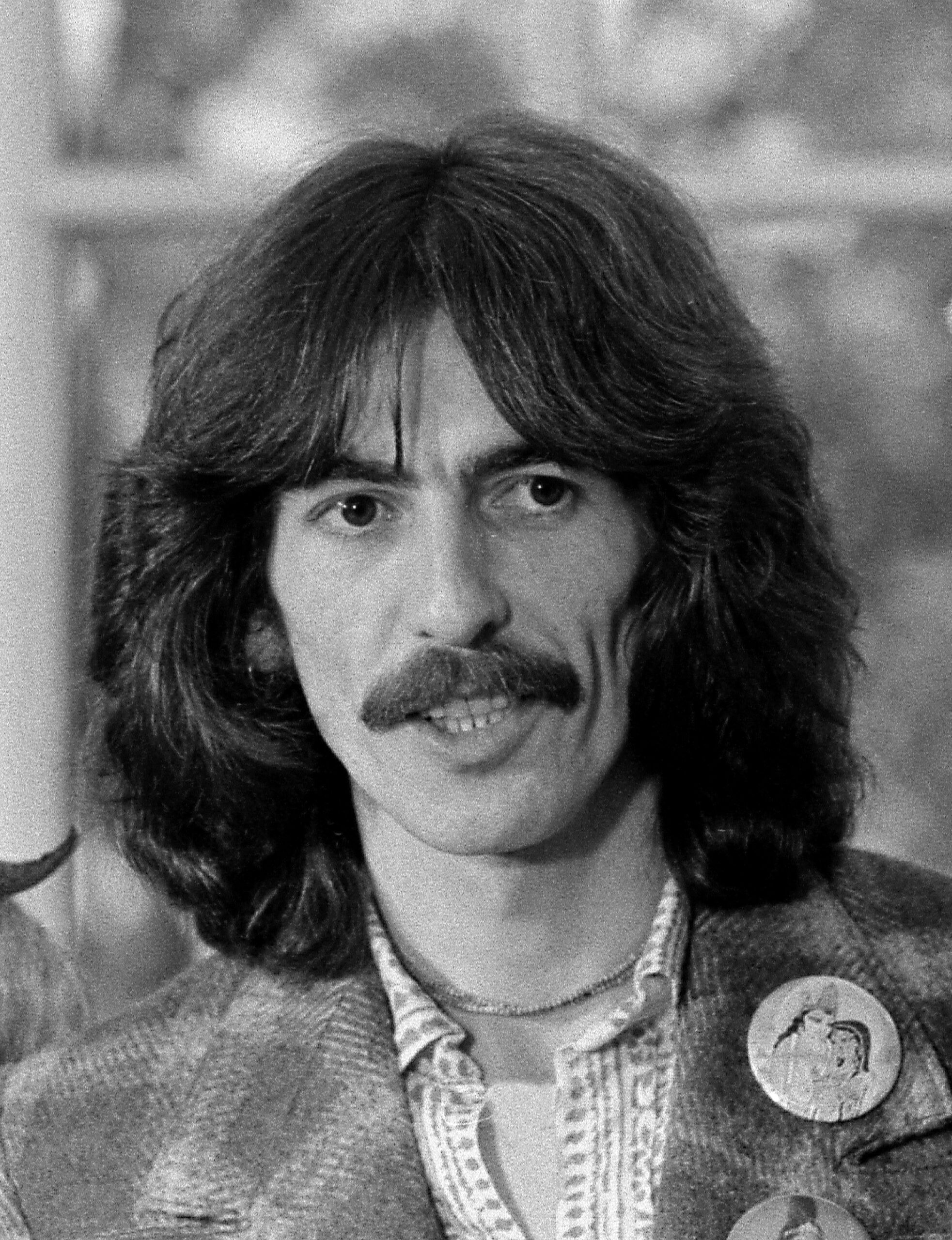
In 1970, George Harrison paid £140,000 for Friar Park, a neglected Victorian estate near Henley-on-Thames. He was 27, newly independent as a solo artist, and exhausted by the pressures surrounding the Beatles. The purchase looked extravagant, even irrational. Yet to Harrison, the Gothic mansion and its sprawling grounds offered something money could not easily buy: distance, silence, and control.
Friar Park would become all three at once—a sanctuary, a creative home, and a beautiful prison whose upkeep demanded an extraordinary share of his attention.
A Victorian Estate Built to Defy Ordinary Life
Friar Park was created in the late nineteenth century by Sir Frank Crisp, a solicitor and passionate collector whose imagination ran far beyond conventional country-house design. Construction began in 1889 and was completed in 1895. The result was a neo-Gothic world of towers, pinnacles, stained glass, carved stone, tunnels, grottoes, lakes, and gardens filled with theatrical details.
Accounts have often described the mansion as containing around 120 rooms, although that figure has been disputed by the Harrison family. The exact number matters less than the scale of the place. Friar Park was not simply a large house. It was a private landscape designed to surprise its occupants at every turn.
Its grounds included an alpine garden, Japanese-style features, a Dutch knot garden, artificial lakes, elaborate topiary, and an artificial Matterhorn more than 20 feet high. Underground grottoes added another layer of mystery. Ceramic gnomes appeared throughout the gardens, part of Crisp’s eccentric visual joke about the grand traditions of English estates.
When Harrison arrived, however, much of this imaginative world was close to collapse. Roofs leaked, windows were broken, electrical systems were outdated, paths had disappeared beneath weeds, and greenhouses stood as rusting skeletons. The estate had beauty, but it also had an urgent appetite for restoration.
Why Harrison Needed a Place Like Friar Park
Harrison’s search for privacy grew out of the unusual pressures of his life. As the youngest Beatle, he had entered the most intense fame machine of the 1960s while still barely out of adolescence. Tours brought screaming crowds, besieged hotels, security concerns, and almost no personal space.
Unlike John Lennon and Paul McCartney, Harrison was often treated as the quiet presence in the group. That label concealed a more complicated reality. He was developing as a songwriter, musician, and thinker while working inside a partnership dominated by two enormous personalities. His songs had to compete for room, and his inner life was frequently kept away from the public.
His interest in Indian music and spirituality gave him another route away from the noise. He studied sitar with Ravi Shankar, explored meditation, and became deeply engaged with Hindu philosophy. These interests were not merely a fashionable response to the counterculture. They reflected a genuine search for meaning beyond celebrity and commercial success.
By the end of the 1960s, the Beatles were fracturing and Harrison was emotionally depleted. Friar Park offered an environment in which he could make decisions without negotiating with bandmates, managers, or an audience. Every restored window, repaired path, and replanted garden could be shaped according to his own judgment.
Restoring a Living Cathedral
Harrison moved into Friar Park in March 1970 with Pattie Boyd and friends who helped make the house habitable. At first, ordinary comforts could not be taken for granted. Electricity was unreliable, hot water was limited, and portable heaters and gas lamps were needed in parts of the property.
The first major task was to recover the grounds. Gardeners and construction workers cleared rubble, reopened paths, removed dead growth, and rediscovered features hidden for decades. Harrison took a personal interest in the work. Gardening was not simply an expensive hobby; it became a form of concentration and repair.
The topiary presented a particularly demanding challenge. Trees that had once been shaped into cones, spirals, peacocks, animals, and geometric forms had grown into ordinary-looking masses of foliage. Specialists had to prune them slowly to reveal the original designs without destroying the old plants.
Roofing, plumbing, heating, windows, stained glass, woodwork, and electrical systems all required attention. The restoration could not be completed in one dramatic project. Friar Park had to be maintained as an ongoing organism, with each improvement creating another responsibility.
Where Music and Gardening Met
Friar Park became more than a retreat. In 1972, Harrison established a recording facility on the property. The studio gave him the freedom to work away from London and to treat the estate as part of his creative life.
Several of his solo projects were associated with the studio, and it also became connected with work by the Traveling Wilburys and later Beatles archival projects. The arrangement suited Harrison’s temperament: music could be made without surrendering the privacy he had worked so hard to create.
The house and gardens also became a visual expression of his interests. The library held books on spirituality, philosophy, and gardening. The grounds supplied endless physical work, while the studio offered a place for composition and recording. At Friar Park, the practical and the imaginative existed side by side.
His son Dhani Harrison later recalled that he initially understood his father’s work as simply working in the garden. The extraordinary fact that this gardener was also a member of the Beatles became clear only later. That contrast captures the private life Harrison was trying to build: not a denial of his past, but a daily world in which fame was no longer the main fact.
The Price of Privacy
A historic estate of this size cannot be sustained by affection alone. Friar Park required gardeners, cleaners, engineers, security staff, specialist contractors, and conservation experts. Topiary needed regular pruning. The artificial Matterhorn needed periodic repainting. Pumps, irrigation, heating, roofs, gutters, chimneys, and greenhouses all demanded continuing expense.
The estate’s protections as a listed property helped preserve its character, but they also made alterations more complicated. Historic materials and distinctive gardens could not simply be replaced with whatever was cheapest. Repairs often required permissions, specialist knowledge, and patience.
Harrison’s music income allowed him to carry the burden, but the arrangement exposed a central contradiction. He had bought the estate to escape the demands of fame, yet the money generated by that fame helped keep the escape alive. Friar Park’s quiet depended on a commercial success he could never entirely leave behind.
He also refused to turn the property into a public attraction. Unlike many historic estates, Friar Park did not become a museum, wedding venue, or regular tourist destination. Privacy remained part of its purpose, even when privacy made the estate financially and practically harder to sustain.
When the Sanctuary Was Breached
On December 30, 1999, the limits of physical security became brutally clear. An intruder entered Friar Park during the night and confronted Harrison inside the house. Harrison was stabbed repeatedly and suffered a punctured lung before his wife, Olivia, intervened and helped subdue the attacker.
Harrison survived the assault, but the incident shattered the idea that the estate could completely separate the family from the dangers of the outside world. The walls, gates, cameras, and distance had created privacy, not invulnerability.
Harrison had already faced serious health problems, including throat cancer. He died in November 2001 at the age of 58. Friar Park had sheltered him for more than three decades, but it had also become the site of the most frightening intrusion of his private life.
Olivia Harrison and the Work of Continuity
After Harrison’s death, Olivia Harrison inherited not only a home but an immense stewardship problem. Preserving Friar Park required decisions about what to save, what to simplify, and how to modernize without erasing its identity.
Some areas were adapted to reduce maintenance, while important gardens and topiary were kept to a high standard. Specialists continued to shape the yew trees, restore historic features, and recover objects associated with the estate’s earlier history. Modern additions, including infrastructure for electric vehicles, showed that preservation did not require freezing the property in the nineteenth century.
The estate has remained private. That choice limits possible income, but it protects the quality Harrison valued most. Friar Park remains a family home rather than a monument managed for visitors. Fans may travel to Henley-on-Thames and stand outside the gates, but the house itself stays largely beyond public view.
A Dream That Survived by Changing
Friar Park’s history is a lesson in the cost of preserving beauty. Sir Frank Crisp created an extraordinary environment but left behind an estate difficult for later owners to support. Religious residents who came after him struggled with the same burden. Harrison succeeded because he combined financial resources with personal commitment, professional help, and an unusual willingness to work on the property himself.
That commitment did not make Friar Park simple. It made the estate possible. Harrison found a place where he could garden, record music, think, and withdraw from the public role that had followed him since his youth. At the same time, he accepted a permanent obligation to roofs, hedges, pipes, staff, security, and restoration.
In the end, Friar Park was neither a perfect refuge nor a straightforward prison. It was a negotiated peace. The estate gave Harrison distance from the world, but demanded constant labor in return. Its walls protected his privacy, but could not guarantee safety. Its beauty offered calm, but only because generations of people continued to pay for and care for it.
That may be the most revealing part of Harrison’s relationship with Friar Park. He did not find peace by escaping responsibility. He found it by choosing responsibilities that felt meaningful—planting, repairing, recording, and preserving a world whose shape he could help determine.