The Swiss Refuge That Preserved Charlie Chaplin’s Final Chapter
After political exile forced Charlie Chaplin away from the United States, the Manoir de Ban became a family home, a creative workshop, and ultimately the foundation of a living cultural legacy.
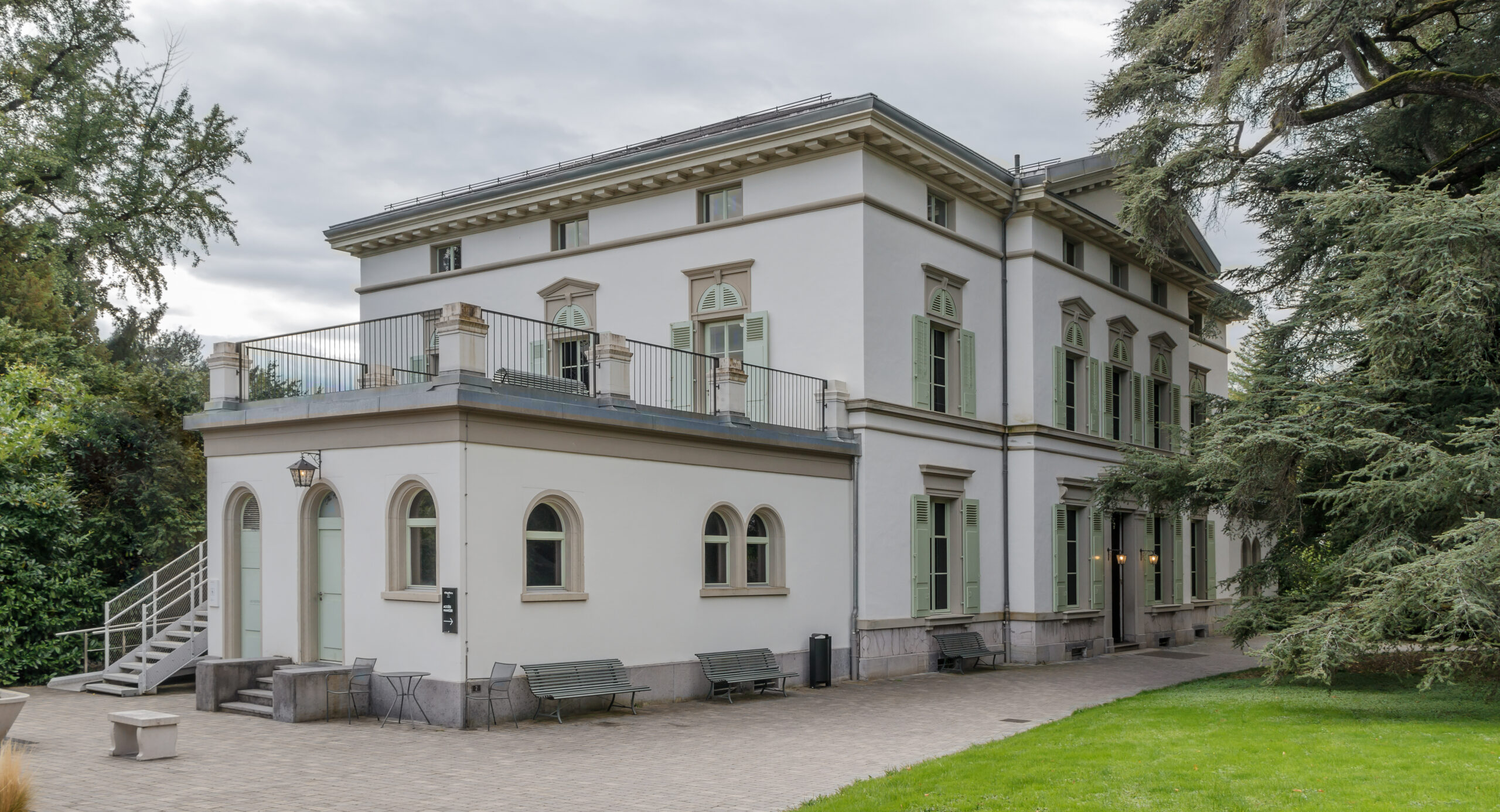
In the hills above Lake Geneva, a white neoclassical mansion looks across the Alps from a quiet park in Corsier-sur-Vevey. Known as the Manoir de Ban, it became Charlie Chaplin’s home after one of the most abrupt reversals in his extraordinary life. What began as an emergency refuge grew into a busy family world, a workplace, and eventually a public institution devoted to preserving his memory.
A refuge born from exile
Chaplin arrived at the property in the aftermath of September 1952, when the United States revoked his permission to re-enter the country while he was sailing to Europe. After four decades in America, he had lost access to the country where he had built his career, studio, fortune, and public identity. The political climate of McCarthyism had turned his sympathy for workers, his criticism of fascism, and his independent views into grounds for suspicion.
His wife, Oona, returned to California to settle the family’s affairs while Chaplin looked toward Switzerland. Political neutrality, discretion, financial stability, and the country’s landscape all made it a compelling destination. On the final day of 1952, Chaplin signed the purchase papers for the estate. The family moved in early January 1953, giving the mansion a role far greater than that of a comfortable residence: it became the place where a displaced public figure could recover a private life.
A house designed for a large family
The estate combined an imposing exterior with the practical complexity of a working household. The mansion stood within roughly 14 hectares of parkland, with mature cedars, sequoias, beeches, elms, orchards, formal grounds, a farm, a greenhouse, a swimming pool, a tennis court, and a historic fountain. Staff quarters above the garage and a network of service bells revealed the hidden logistics behind the calm appearance.
Inside were a music room, a formal dining room, a library, kitchens, and bedrooms for the Chaplins’ eight children. The dining table could accommodate a large gathering, and the house welcomed artists, political figures, writers, and other distinguished visitors. Yet its most important function was not ceremonial. It gave Chaplin’s children the stable childhood he had never known himself.
The contrast was profound. Chaplin had grown up in severe poverty in south London, moving through charitable institutions and precarious theatrical work. At the Manoir de Ban, he could walk with his children through the park, take them to the lake, and participate in the ordinary routines of family life. Local people recognized him but generally allowed him the privacy he had been denied in Hollywood.
The creative life of the manor
Switzerland did not end Chaplin’s work. It changed its setting. In the music room, he continued composing and revising scores for films including The Kid, City Lights, The Circus, and Modern Times. The house also became a writing space for projects such as A King in New York, A Countess from Hong Kong, and his unfinished film project The Freak.
Chaplin wrote his autobiography at the estate as well. The book drew on memories of hardship, performance, fame, marriage, and political conflict. His creative work required more than quiet rooms: musicians, technicians, recording equipment, editors, and visitors periodically traveled to Corsier-sur-Vevey. The refuge was peaceful, but it was never idle.
The park offered a different kind of creative support. Chaplin was known to walk there for long periods, sometimes alone and sometimes with one of his children. After decades of public pressure and industrial filmmaking, the grounds gave him a human scale in which to think, work, and simply be present.
The cost of maintaining a private world
The Manoir de Ban was also an expensive undertaking. A large historic house, extensive gardens, aging heating systems, slate roofs, wooden windows, and centuries-old trees required year-round care. At the busiest points, as many as 13 employees helped run the estate, including gardeners, domestic staff, cooks, chauffeurs, and child-care workers.
Chaplin’s wealth made the arrangement possible, but the property still created pressure. After the upheaval of 1952, he had to manage assets and tax disputes while supporting a large household. He continued working partly because the estate and family demanded it. The refuge that freed him from Hollywood’s political atmosphere also tied him to the continuing need to earn, organize, and protect the legacy attached to his name.
A final home and a shocking aftermath
Chaplin died at the Manoir de Ban on Christmas Day in 1977, aged 88. He had spent 25 years there, long enough for the house to become inseparable from the final chapter of his life. The peace did not last without interruption. In 1978, his coffin was stolen from the cemetery at Corsier-sur-Vevey by men seeking a ransom. Oona refused to negotiate, and after an extensive police operation the coffin was recovered and placed beneath a reinforced concrete slab.
Oona continued living at the manor until her death in 1990. The eight children then inherited a vast property with substantial upkeep costs, aging infrastructure, and no obvious way to preserve it as a private residence. Selling would have been financially practical, but it would also have closed the family home to the public and ended the continuity of the place.
From family home to cultural institution
The heirs eventually entrusted the property to a foundation created to manage Chaplin’s legacy. The goal was not simply to preserve a building, but to make the estate financially and culturally sustainable without stripping it of its domestic character.
The transformation required years of planning, restoration, permits, fundraising, and difficult compromises. The historic mansion needed modern electrical, sanitary, and climate systems. The park required renewal after decades of reduced maintenance. A separate studio building was designed to present Chaplin’s screen career without turning the house itself into a conventional exhibition hall.
In 2008, a private investment partner provided an important financial foundation for the project. Architects, museum designers, conservation specialists, and members of the Chaplin family then worked toward a public opening. The process lasted roughly 15 years and demanded an investment of more than 60 million Swiss francs.
Chaplin’s World
On April 17, 2016, the estate opened to visitors as Chaplin’s World. The experience is organized around three connected elements: the manor, the studio, and the park.
The manor preserves the atmosphere of a lived-in home. Original furnishings, personal objects, family photographs, books, and rooms associated with Chaplin’s daily life make the building feel intimate rather than ceremonial. The studio provides a larger cinematic setting, with recreated environments, wax figures, and immersive displays that introduce visitors to the characters and worlds of his films. Outside, the park remains a place to walk beneath mature trees and look toward the lake and Alps that Chaplin saw for a quarter-century.
This combination matters. A traditional museum might explain Chaplin’s career through objects and labels. The estate adds the missing context: the domestic life, landscape, routines, and relationships that surrounded the artist after fame had already made him a global symbol.
Why the estate survived
The property’s survival depended on more than architectural beauty or the power of Chaplin’s name. It required a practical decision to transform a costly private inheritance into a professionally managed public attraction. Ticket sales are only one part of the model. Events, food service, retail, seasonal programming, private rentals, and careful visitor management all help fund conservation.
That balance remains difficult. More visitors create revenue, but they also wear down floors, stairs, doors, and historic interiors. The park needs attention in every season, while the mansion’s original materials require specialist care. Preserving authenticity means accepting that maintenance is never finished.
The result is a rare kind of heritage site: neither a frozen monument nor an ordinary museum, but a former family home that has learned to serve a wider public. Its success protects not only Chaplin’s image, but the evidence of how he lived after exile reshaped his life.
The meaning of the Manoir de Ban
Chaplin came to Switzerland under pressure, uncertain whether the most productive years of his career were behind him. At the Manoir de Ban, he found time: time to raise children, write in his own voice, compose music, walk among old trees, and live outside the political machinery that had defined his American years.
The estate therefore represents more than luxury. It holds the tension between the public legend and the private man. Behind the grand rooms was a demanding household. Behind the famous name was someone who never forgot hunger or instability. Behind the refuge was the continuing cost of maintaining a world large enough for a family, an artist, and a legacy.
Today, visitors encounter the house not merely as a monument to silent cinema, but as the setting for Chaplin’s final and most personal chapter. Its preservation shows how a private home can become public history without losing the intimacy that made it meaningful in the first place.